The housing market isn’t flashing the same warning signs it did in 2008. But that doesn’t mean homeowners aren’t feeling the pressure.
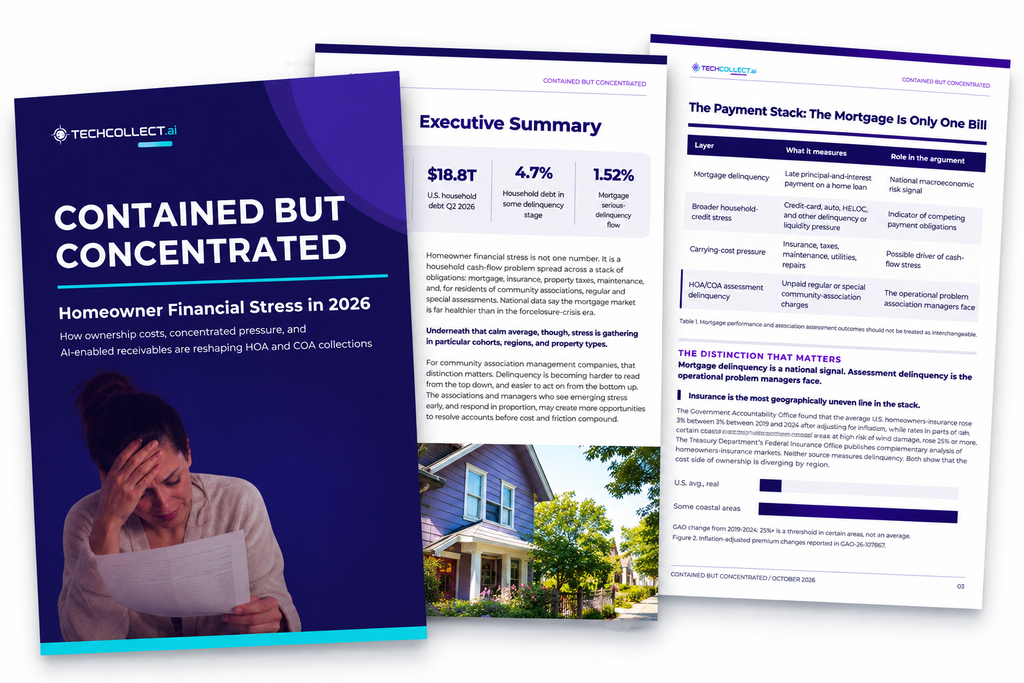
According to data examined in TechCollect’s new whitepaper, Contained but Concentrated, U.S. household debt reached $18.8 trillion in Q2 2026. While overall household delinquency remains relatively stable, the annualized flow of mortgage balances entering serious delinquency increased from 1.29% to 1.52% year over year.
The bigger story? Homeowner financial stress isn’t evenly distributed, and mortgage payments only tell part of it.
The Mortgage Is Only One Bill
Insurance premiums. Property taxes. Utilities. Maintenance. HOA and COA assessments. Special assessments.
Homeowners are managing an increasingly complicated stack of financial obligations, and those bills don’t always arrive at convenient times.
A homeowner can have significant equity, a current mortgage, and still struggle to cover an unexpected special assessment.
For community association managers and boards, that creates a challenge: traditional collections processes often treat every past-due account the same, even when the circumstances are very different.
What This Means for HOA and COA Management
Our 18-page whitepaper explores why management companies need to rethink how they identify and respond to past-due accounts.
Inside, we examine:
- Where financial stress is concentrating: Why geography, property type, insurance exposure, and household liquidity matter more than national averages alone.
- The hidden impact of rising ownership costs: How competing financial obligations can affect assessment payments.
- Why traditional collections workflows fall short: The limitations of fixed reminders and automatic attorney escalation.
- The role of AI in receivables: How earlier detection, personalized outreach, and smarter account prioritization can improve the collections process.
- A practical 90-day playbook: Steps management companies can take now to improve receivables operations ahead of 2027.
The Opportunity Is Earlier Intervention
The data doesn’t point to an imminent nationwide housing crisis. It points to something more nuanced: financial pressure building in specific communities and homeowner segments.
And that’s exactly why waiting until an account is 60 or 90 days past due can be costly.
Management companies that identify emerging payment stress earlier have more opportunities to resolve balances, reduce unnecessary legal escalation, and protect homeowner relationships.
The future of collections starts long before an account reaches an attorney.
Read the Full Whitepaper
Explore the data, emerging trends, and practical recommendations in TechCollect’s latest research report.